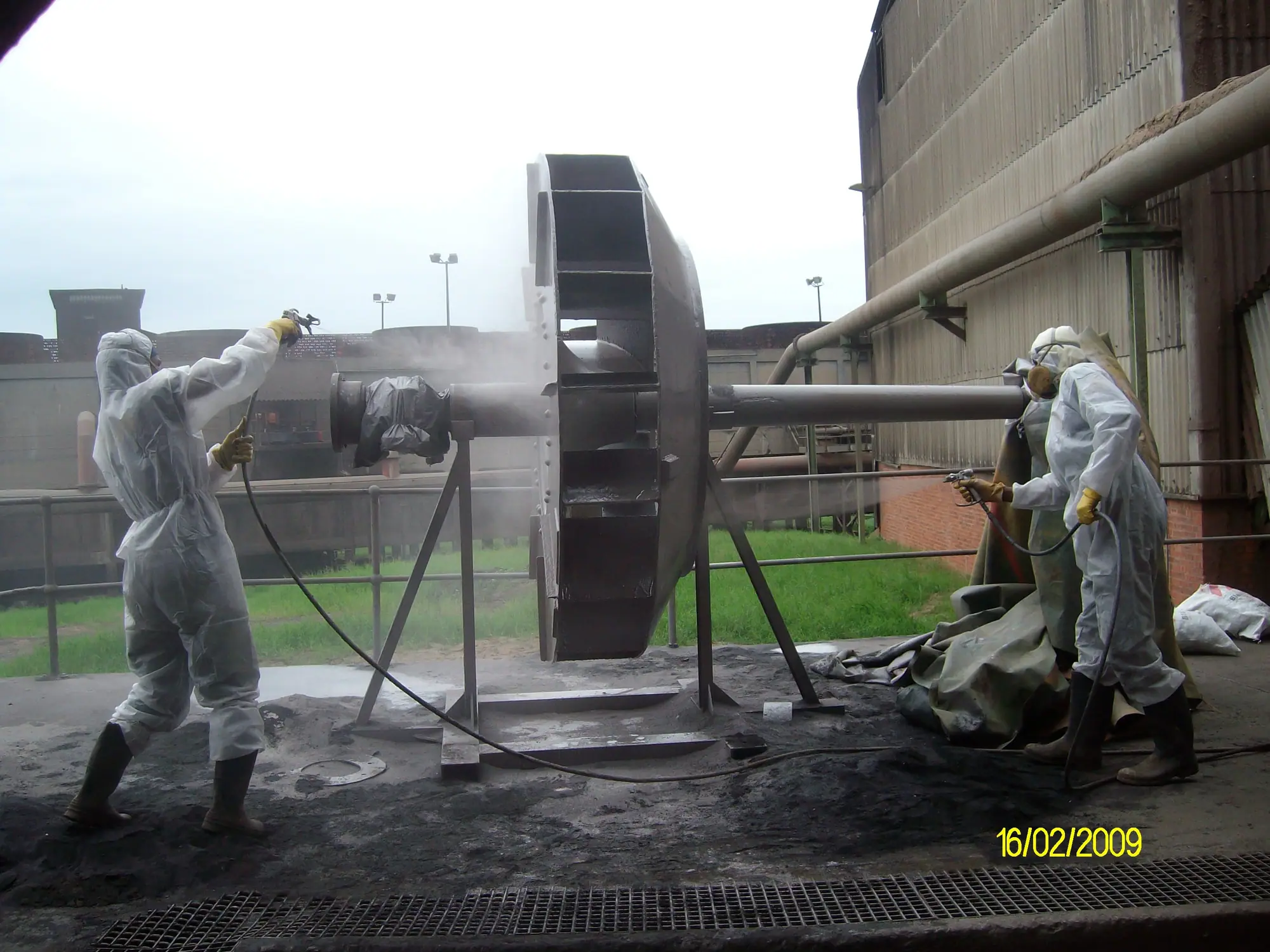
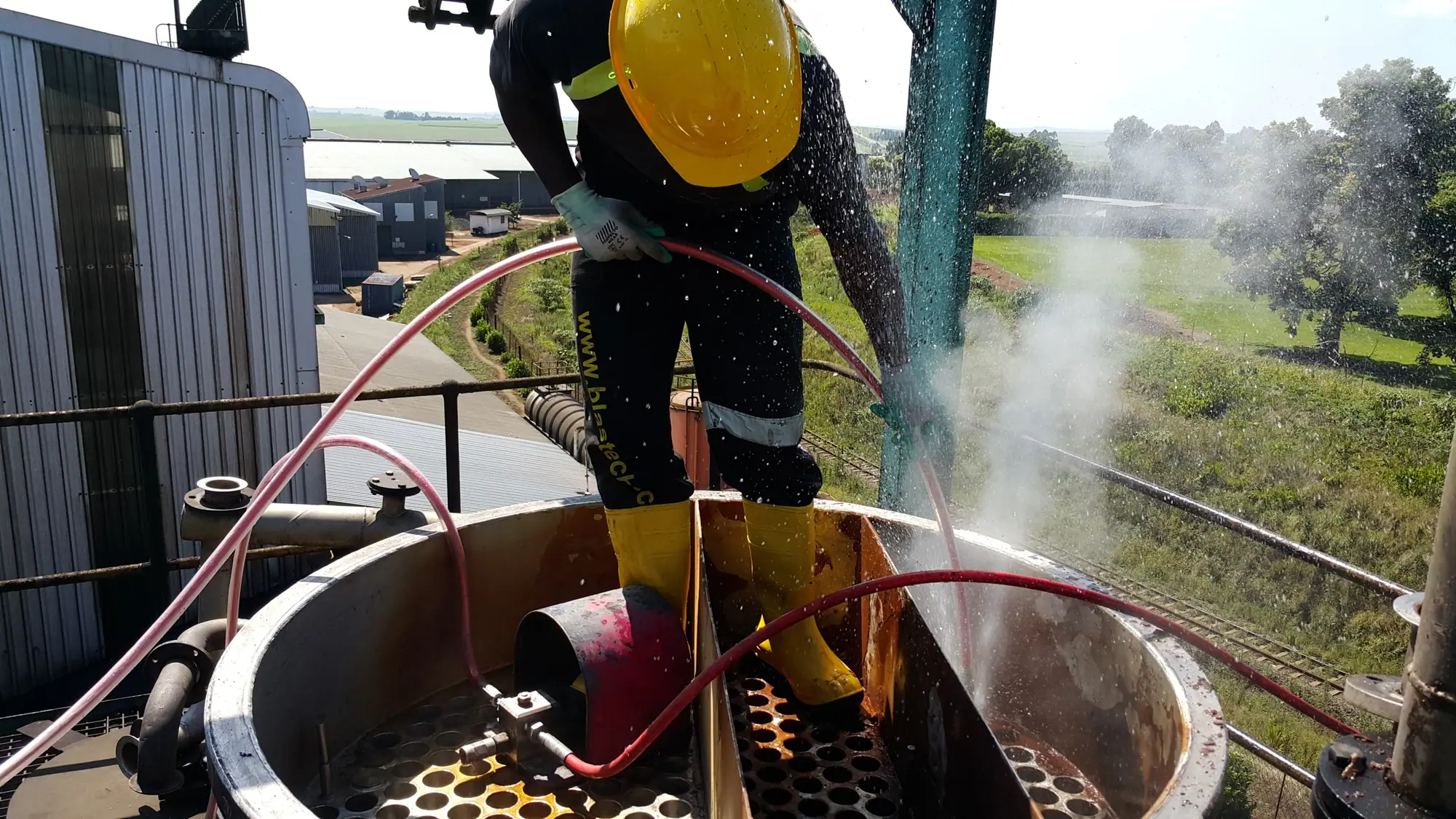
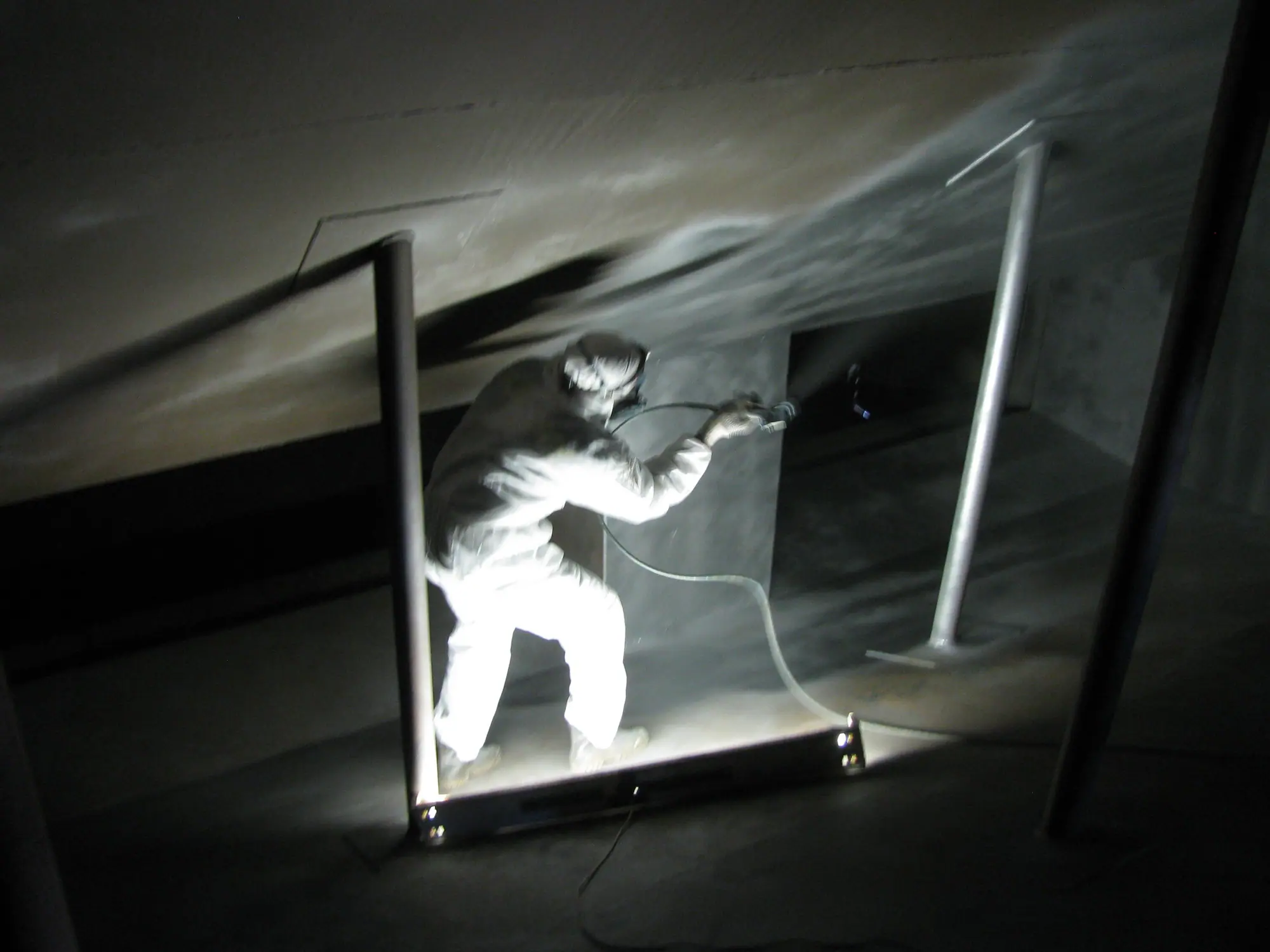
Ceramic-filled coatings are heavy-duty protective systems for high-abrasion environments such as ID fans and pump volute casings.
What Blastech does
Key capabilities
The systems most often specified are Corrocoat, Nordcoat 2, Nordbak Fixwear and StonCor Phenoline glass flake. Each is selected against the wear mechanism, the temperature and the chemistry the component has to survive.
Abrasive blasting back to the specified surface standard
Application of ceramic-filled and glass-flake reinforced systems
Armour-surfacing of high-wear areas caused by solids and slurries
Rebuilding of worn or damaged pump impellers and casings
Lining of pipe interiors, chutes, cyclones and elbows
Typical applications
ID fan rotors, casings and inlet cones
Pump volute casings and impellers
Kicker shafts and elevator casings
Slurry lines, pipe elbows and feed chutes
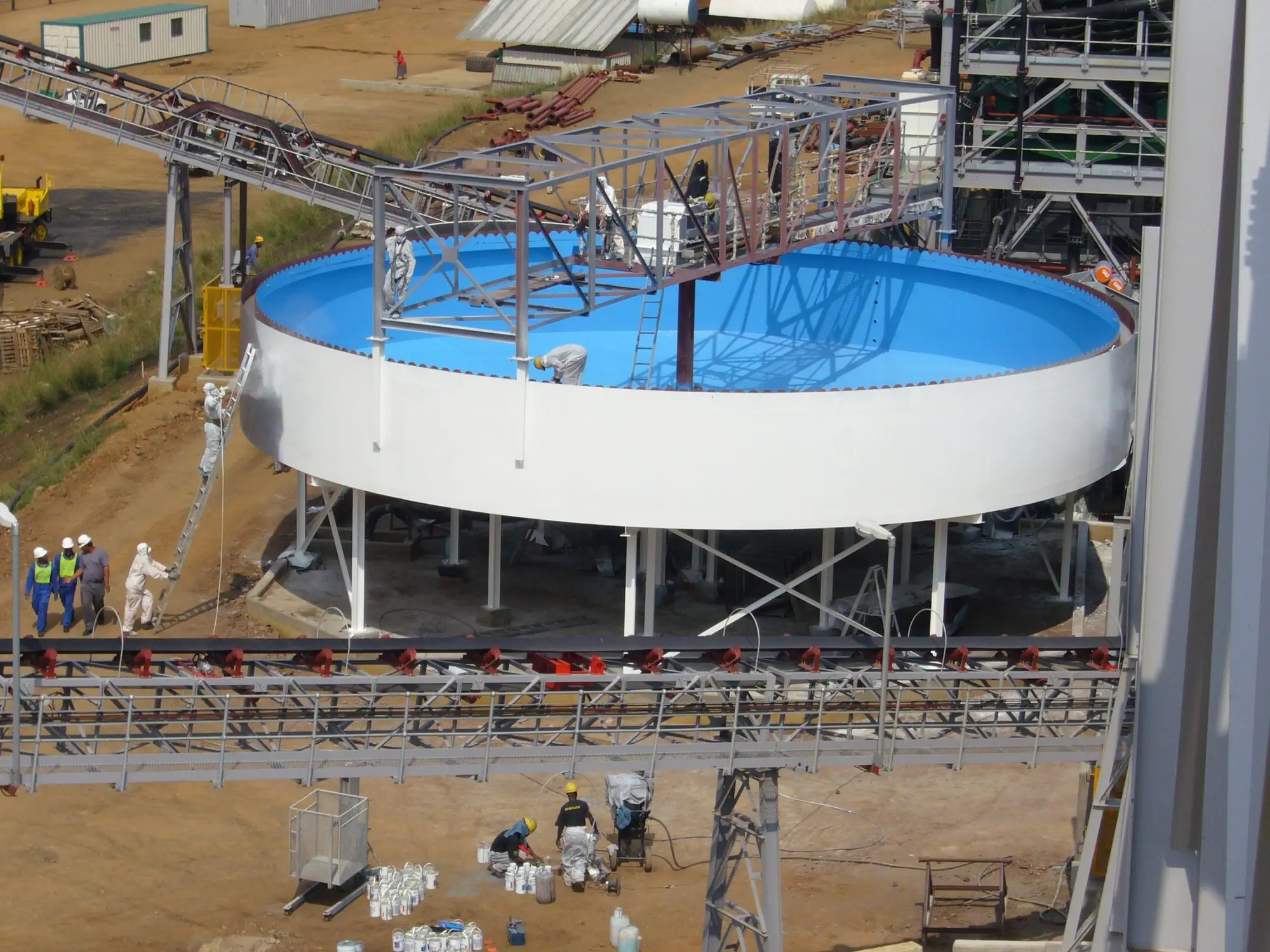
Cyclones and chemical process vessels
Technical advantages
Extends the working life of components exposed to solids and slurries
Restores the profile of worn surfaces rather than replacing the part
Chemical resistance alongside abrasion resistance
Conforms to curved surfaces such as cones and elbows
Reduces unplanned downtime between shutdowns
Before and after
The same asset, before and after
Drag the handle or use the arrow keys to compare.
BeforeAfter
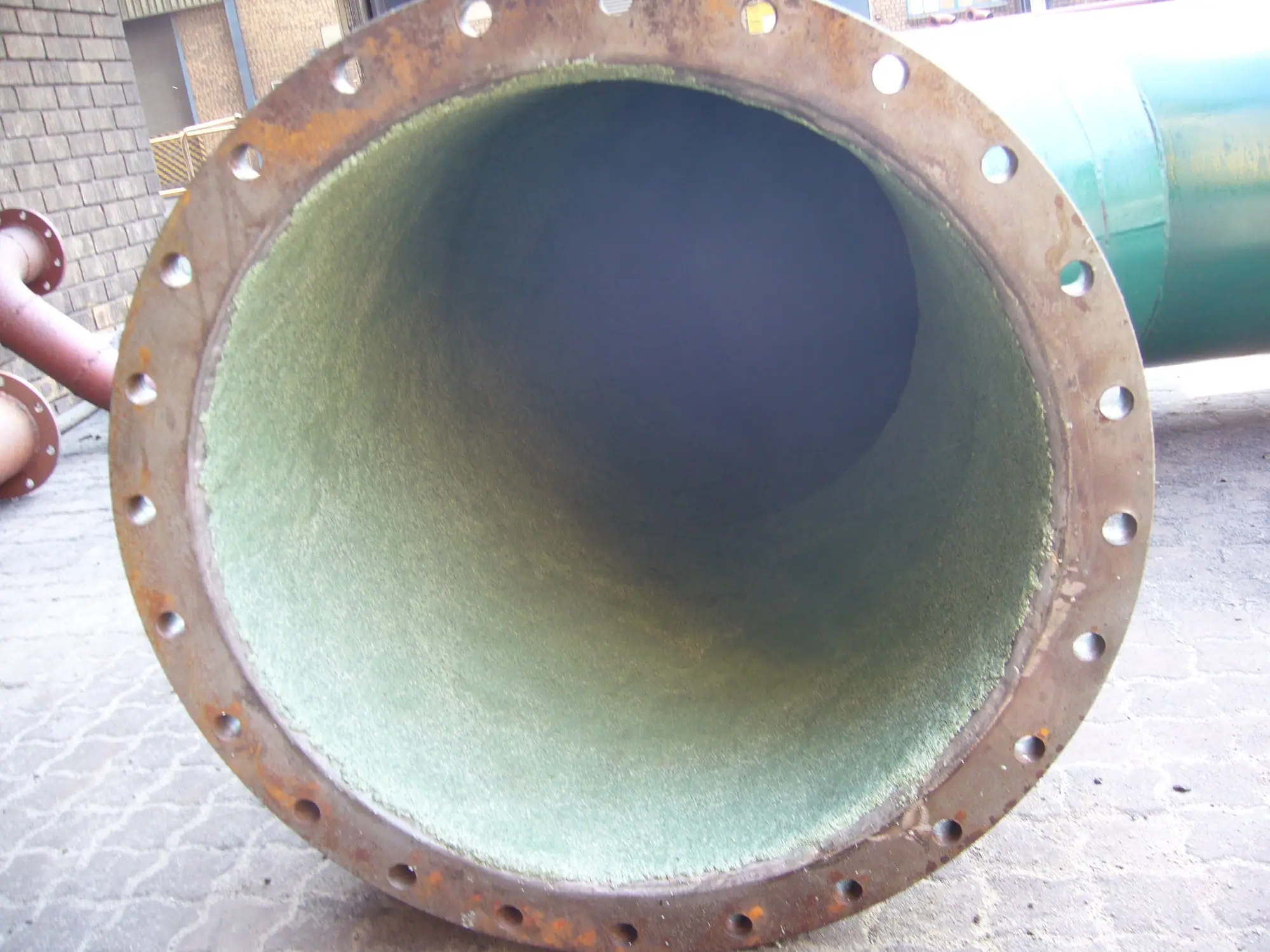
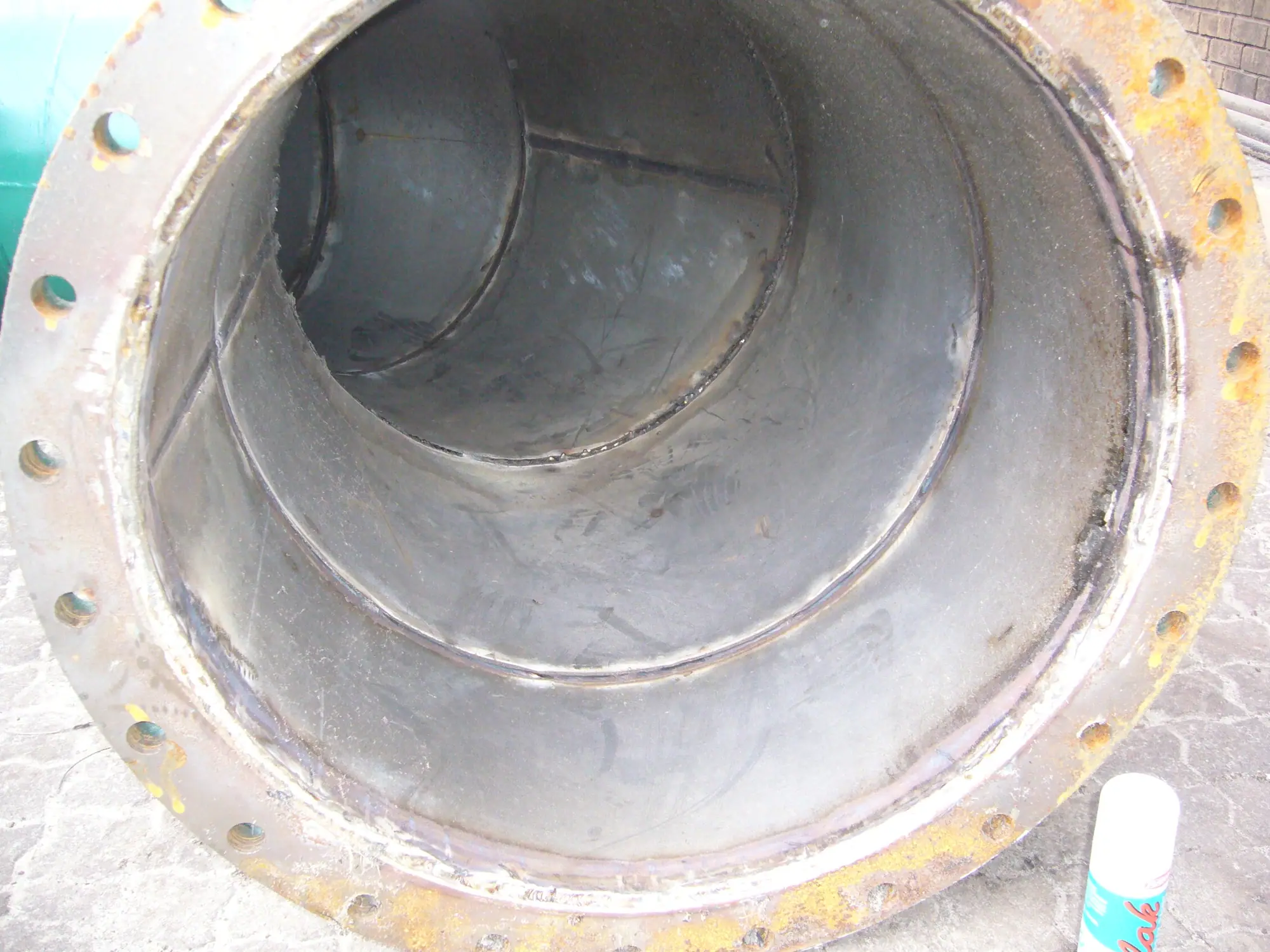
Pipe interior ceramic lining
Before: Pipe interior before ceramic lining·After: The same pipe after ceramic lining
Project gallery
Ceramics project work
13 photographs from Blastech ceramics projects. Select any image to view it larger.
Technical resources
Related product data sheets
Manufacturer documents for the systems most often specified on this type of work.
Plasmet HTE
Corrocoat
A viscous, solvent-free, amine-cured epoxy containing stainless steel flakes, glass flakes and silicon carbide, for areas requiring abrasion and chemical resistance.
A two-part, 100% solids co-polymer coating giving maximum film thickness in a single coat. Heavy-duty corrosion, acid and wear resistance, tested against SANS 1217.
A glass-flake filled epoxy-novolac tank and pipe lining. Dense and highly cross-linked, giving excellent abrasion, permeation and chemical resistance, with resistance to dry heat to 232 °C, deionised water to 93 °C and crude oil to 82 °C.
A single-component vinyl acrylic finish coat with good chemical resistance, flexibility and weathering. Applied over inorganic zinc, vinyl and epoxy primers on structural steel, piping and tank exteriors, and over surfaces running up to 149 °C.